
X
Filter

Search Filter

16 Result found

CPU Core

Display Technology

Manufacturer

OS

SOC

Special Requirements

Edge AI

Geniatech delivers cost-effective, flexible edge AI hardware solutions tailored for embedded computing in AIoT and industrial applications. Our diverse portfolio—from compact AI modules to robust edge computers—enables real-time, low-latency deep learning directly at the edge. Designed for high efficiency, Geniatech’s edge AI solutions combine exceptional processing power with low energy consumption, supporting a wide range of neural networks and concurrent multi-model inference. Leveraging Geniatech’s advanced technology, businesses can reduce costs, expand capabilities, and accelerate deployment cycles—empowering faster time-to-market for innovative AI-driven IoT innovations.
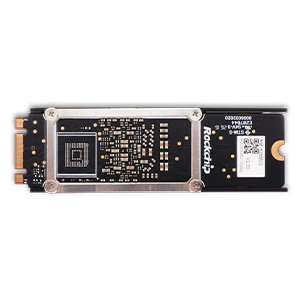
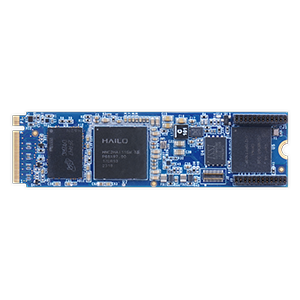
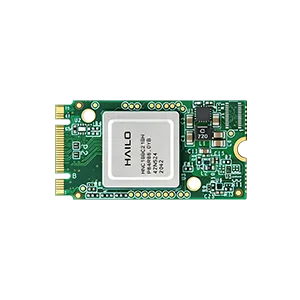
Hailo-8 AI Accelerator Module

AIM-H8

Hailo-8 AI Accelerator Module
-40°C to +85°C
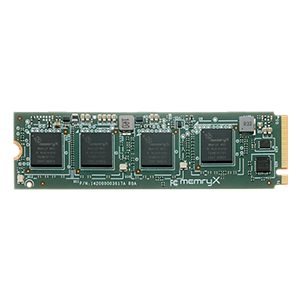
MemryX MX3 M.2 AI Accelerator

MX3

MemryX MX3 M.2 AI Accelerator
40 TOPS M.2 AI Accelerator Module

AIM-M2

40 TOPS M.2 AI Accelerator Module
Edge AI InferenceLow latency
DEEPX M.2 AI Accelerator

DX-M1

DEEPX M.2 AI Accelerator
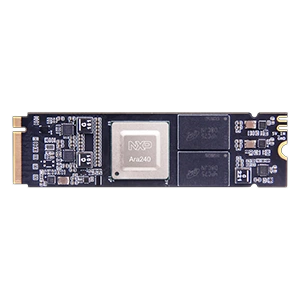
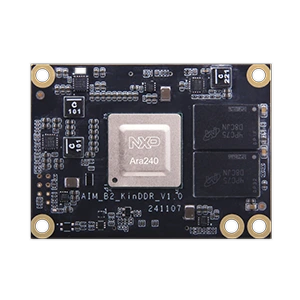
40 TOPS AI Inference Accelerator with Kinara Ara-2

AIM-B2

40 TOPS AI Inference Accelerator with Kinara Ara-2
Board-to-BoardGenerative AI
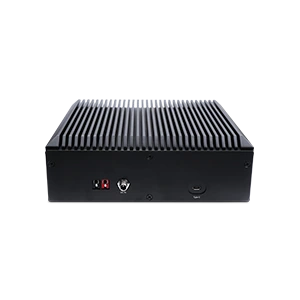
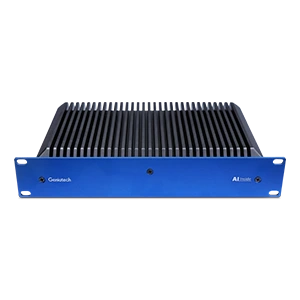
High-Performance Edge AI Computer

APC880

High-Performance Edge AI Computer
Kinara Ara-2NXP i.MX8M Plus
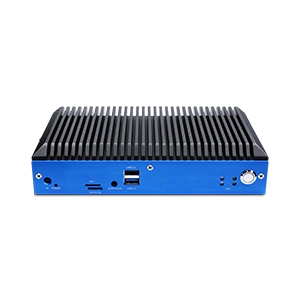
AI Edge Computing Box with RK3588 & Hailo 8

APC3588-AI

AI Edge Computing Box with RK3588 & Hailo 8
8K Video DecodeTriple Gigabit-40°C to +85°C
Cost-Optimized Edge AI System

APC880E

Cost-Optimized Edge AI System
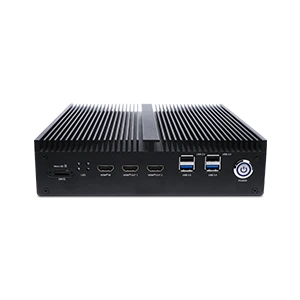
Edge AI Mini PC

APC3576

Edge AI Mini PC
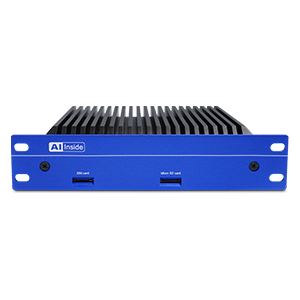
AI Box with Synaptics VS680 & 7.9 TOPS NPU

APC680

AI Box with Synaptics VS680 & 7.9 TOPS NPU
RK3588 ARM-based Industrial Embedded Computer

APC3588

RK3588 ARM-based Industrial Embedded Computer
8K Video Decode4K Multi-Display-40°C to +85°C
Compact Edge AI Mini PC with NXP & Kinara Ara-2

APC880 Mini

Compact Edge AI Mini PC with NXP & Kinara Ara-2
Kinara Ara-2NXP i.MX8M Plus
12

What Is Edge AI Hardware?

Edge AI hardware refers to computing platforms designed to run AI tasks locally on devices, enabling real-time processing, lower latency, and reduced bandwidth by handling data where it is generated instead of in the cloud. These platforms combine general-purpose processors (CPU/MCU) with accelerators like GPUs, NPUs, TPUs, FPGAs, or ASICs to speed up deep learning inference under tight power and thermal constraints.

Key Features & Benefits of Edge AI Hardware

  • Low latency: Local inference minimizes cloud delays, enabling timely response for vision, control, and safety-critical systems.
  • Power efficiency: Operates under strict power and thermal limits, making performance per watt a key design metric.
  • Heterogeneous computing: Combines CPUs, NPUs, GPUs, and DSPs for efficient mixed workloads.
  • Deployment Flexibility: Supports multi-device and multi-node deployments, with flexible form factors for easy integration.
  • Connectivity independence: Works offline or intermittently, preventing downtime in critical applications.
  • On-device privacy and security: Keeps sensitive data local, reducing exposure and easing compliance

Common Types of Edge AI Hardware

  • Chip-Level
    Core computing units, including microcontrollers (MCUs) for low-power, real-time control tasks; SoCs for integrated heterogeneous AI and general-purpose processing; GPUs and VPUs for vision and video analytics; and specialized NPUs, FPGAs, and ASICs for high-performance, low-latency workloads in robotics, autonomous driving, and other edge applications.
  • Module-Level
    Development-ready AI SoMs (compact compute modules with AI-enabled SoCs) and add-on AI accelerator modules (AI coprocessors that offload intensive neural network computation from the CPU, typically via M.2/PCIe), simplifying system design and enabling dedicated AI processing in industrial and embedded devices.
  • System-Level
    Complete edge systems that integrate AI via on-board or plug-in AI accelerators, including AI SBCs, Box PCs, gateways, AI cameras and smart devices, supporting low-latency, on-device AI inferencing with improved data privacy for industrial, retail, smart city, and IoT applications.

Edge vs Cloud AI Hardware

The main difference lies in where computation runs and how hardware is optimized.

Aspect Edge AI Hardware Cloud AI Hardware
Deployment On-device or near-device (cameras, gateways, robots). Centralized data centers or cloud regions.
Latency Very low; millisecond-level, real-time local inference. Higher; depends on network delays.
Connectivity Can operate offline or intermittently. Requires reliable internet connectivity.
Compute scale Constrained by power, size, and cost; smaller models. Massive GPU/TPU clusters; huge models.
Power budget Optimized for efficiency and thermal limits. High power consumption in large facilities.
Scalability Scaling by deploying more edge devices. Virtually elastic; add or remove instances or GPUs on demand.
Data privacy High; raw data stays local, reducing exposure. Lower; data is centralized, requiring stricter access controls.
Cost model Primarily device-based costs with reduced reliance on cloud resources. Ongoing operational costs tied to cloud compute, storage, and data transfer.