
X
Filter

Search Filter

5 Result found

CPU Core

Display Technology

Manufacturer

OS

SOC

Special Requirements

AI Accelerator

Geniatech AI Accelerator Modules offer a cost-effective, flexible, and ready-to-deploy hardware solution for enhancing edge devices with powerful AI capabilities. Available in M.2 and board-to-board connector formats, these modules seamlessly integrate with existing PCs and edge systems to boost deep learning performance. Designed for scalability, they enable real-time, low-latency AI inferencing across a wide range of industrial and IoT applications. With high performance and low power consumption, Geniatech’s AI accelerator cards provide an efficient, scalable solution tailored to the demands of edge AI deployment.

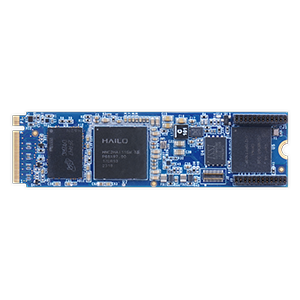
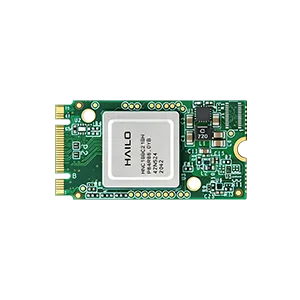
Hailo-8 AI Accelerator Module

AIM-H8

Hailo-8 AI Accelerator Module
-40°C to +85°C
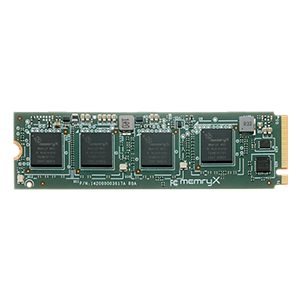
MemryX MX3 M.2 AI Accelerator

MX3

MemryX MX3 M.2 AI Accelerator
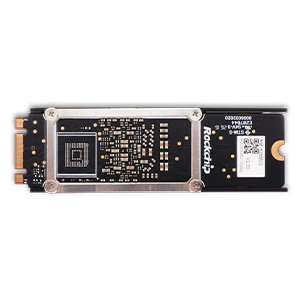
40 TOPS M.2 AI Accelerator Module

AIM-M2

40 TOPS M.2 AI Accelerator Module
Edge AI InferenceLow latency
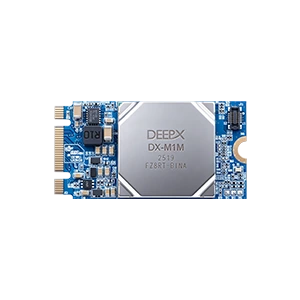
DEEPX M.2 AI Accelerator

DX-M1

DEEPX M.2 AI Accelerator
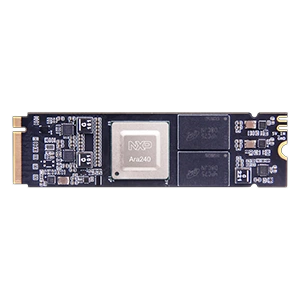
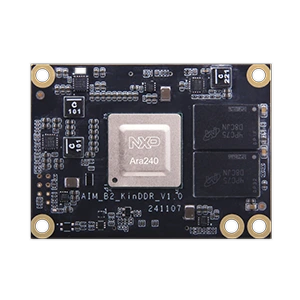
40 TOPS AI Inference Accelerator with Kinara Ara-2

AIM-B2

40 TOPS AI Inference Accelerator with Kinara Ara-2
Board-to-BoardGenerative AI

What is an AI Accelerator Card/Module?

An AI accelerator card or module is a dedicated hardware component built to run AI tasks far more efficiently than a general‑purpose CPU. It is typically based on a dedicated ASIC (Application-Specific Integrated Circuit), optimized for massively parallel matrix and vector operations used in deep learning.

These accelerators are deployed as plug-and-play modules (e.g., M.2 or PCIe cards) or integrated onto custom boards. Working as a co-processor alongside the main CPU, they handle intensive neural network calculations, freeing the CPU for system tasks and greatly improving performance and power efficiency for edge computing.

The Key Advantages of AI Accelerator Modules

  • Exceptional Performance per Watt
    AI accelerators use specialized architectures to deliver very high TOPS with only a few watts of power, enabling strong AI performance even in tight thermal and power envelopes.

  • Rapid Integration and Time-to-Market
    With standard interfaces and form factors like PCIe and M.2, accelerators can be plugged into existing x86 or ARM systems, cutting redesign effort and significantly shortening development and launch cycles.

  • Deterministic, Low-Latency Performance
    On-chip memory and streamlined data paths allow accelerators to provide predictable, low-latency inference, meeting strict real-time requirements in robotics, automation, and video analytics.

  • Optimized Total Cost of Ownership
    High compute density, easier integration, and lower power and cooling demands reduce hardware count, engineering effort, and operating costs, improving long-term TCO for large-scale edge deployments.

Common Form Factors & Interfaces for AI Accelerator Modules

AI accelerator modules are designed to meet diverse deployment needs. The choice of form factor directly impacts integration complexity, performance scalability, and suitability for the target environment.

  • PCIe Cards: Best for data centers and high-end edge servers. They offer maximum bandwidth and power, delivering top performance for the most demanding AI tasks.
  • M.2 Modules: The go-to choice for compact edge devices like IoT gateways and industrial PCs. Their small size and plug-and-play PCIe connection (no extra power cables) make integration simple and straightforward.
  • Custom AI Modules: These are compact boards containing the AI chip, memory, and other essentials, designed to be soldered or connected onto a mainboard. They are tailored for high-volume, cost-sensitive products that require maximum integration, commonly found in automotive, robotics, and consumer electronics.